
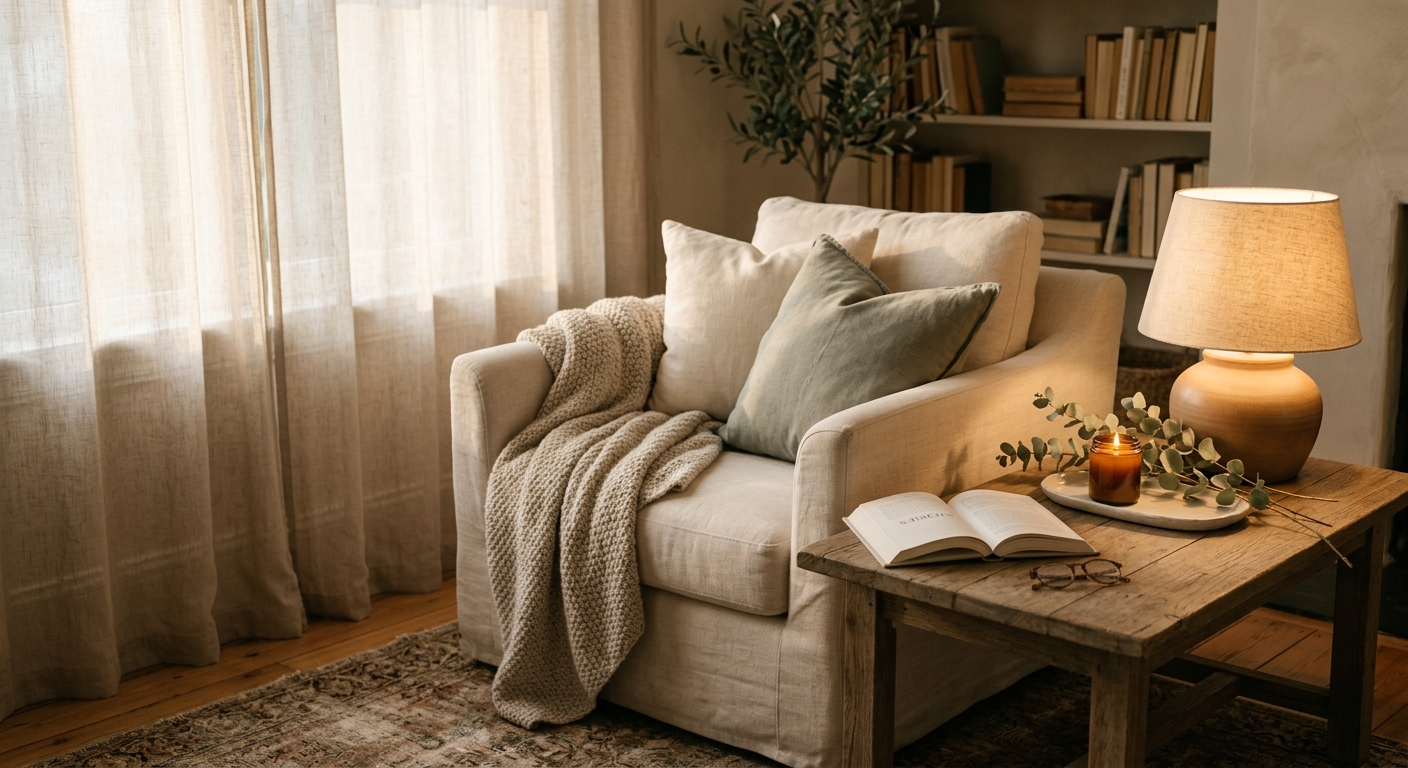

For the highly sensitive woman whose home is supposed to be a sanctuary but somehow keeps feeling like another source of pressure — these 10 sensory-safe strategies bring your nervous system back home.
Your home should be the place where your nervous system can finally relax, but for many people, home has become another source of overstimulation. Noise, clutter, bright lights, constant screens, and endless tasks can overwhelm your senses and keep your body in a state of tension. Reducing overstimulation at home isn’t about making your space perfect — it’s about making it supportive.
If you’ve been feeling easily irritated, mentally foggy, emotionally sensitive, or physically tense, your home environment may be contributing more than you realize. Here’s how to create a space that helps your nervous system breathe again. For the full pillar, see our Cozy Home Hub.
What Overstimulation Looks Like at Home
Overstimulation happens when your senses receive more input than they can comfortably process. At home, this often shows up as visual clutter, loud noises, harsh lighting, constant notifications, or too many unfinished tasks in your line of sight.
Your home should feel like a place where your body can soften — not tighten. For a deeper look at overstimulation itself, see our Overstimulation Relief Hub.
Strategy #1: Reduce Visual Clutter
a quieter inbox
Like this slower kind of writing?
Subscribe for soft letters — slow living, hygge, nervous-system care, & the four free gifts.
Visual clutter is one of the biggest sources of overstimulation. When your eyes have too much to process, your brain becomes overwhelmed. Reducing clutter doesn’t mean becoming minimalist — it means creating visual calm.
- Clear countertops.
- Simplify decor.
- Use closed storage.
- Keep surfaces clean.
When your space looks calm, your mind feels calm.
Strategy #2: Soften Your Lighting
Harsh lighting overstimulates your nervous system. Soft, warm lighting helps your body relax. Replace bright white bulbs with warm-toned ones. Use lamps instead of overhead lights. Add candles or soft string lights for evening calm.
Lighting sets the emotional tone of your home.
Strategy #3: Create Quiet Zones
Your home needs at least one space where noise is minimal. This could be a corner, a chair, or a small room. A quiet zone gives your nervous system a place to reset when everything feels too loud.
Noise is one of the most common triggers of overstimulation — reducing it makes a huge difference.
Strategy #4: Limit Digital Overload
Screens are a major source of sensory overwhelm. Reducing digital stimulation at home helps your nervous system unwind. Set boundaries around screen time. Turn off unnecessary notifications. Create screen-free zones or screen-free hours.
Your nervous system needs breaks from constant input.
Strategy #5: Use Calming Scents
Scent has a powerful effect on your nervous system. Calming scents like lavender, chamomile, vanilla, and eucalyptus help your body relax. Use essential oils, candles, or diffusers to create a soothing atmosphere. For which oil to reach for in any moment, see our Essential Oils Hub.
Your home should smell like comfort.
Strategy #6: Incorporate Soft Textures
Soft textures help your body feel safe. Add blankets, pillows, rugs, and cozy fabrics to your space. These elements create a sensory environment that feels warm and grounding.
Your nervous system responds to softness.
Strategy #7: Create a Nighttime Wind-Down Space
Evenings are when your nervous system needs the most support. Create a nighttime space that signals to your body that it’s time to slow down. Dim the lights, reduce noise, and create a cozy environment that encourages rest.
Your nighttime environment shapes your sleep quality.
Strategy #8: Reduce Task Overload
Seeing too many unfinished tasks can overwhelm your mind. Reduce task overload by creating simple routines. Tidy for five minutes at a time. Keep cleaning supplies accessible. Break tasks into small steps.
Your home should not feel like a to-do list.
Strategy #9: Add Elements of Nature
Nature naturally calms your nervous system. Add plants, natural materials, or open windows to bring in fresh air. Even small touches of nature help reduce overstimulation.
Your home should feel alive, not chaotic.
Strategy #10: Create a Sensory-Safe Retreat
Every home needs a retreat — a place where you can go when everything feels too loud, too bright, or too overwhelming. This space doesn’t need to be big. It just needs to feel safe.
- A chair with a blanket.
- A corner with soft lighting.
- A space with calming scents.
- A place where your body can exhale.
Final Thoughts
Reducing overstimulation at home is not about perfection — it’s about intention. It’s about creating a space that supports your nervous system instead of overwhelming it. When your home feels calm, your body feels calm. When your environment is peaceful, your mind becomes peaceful. Your home can be your sanctuary again.
More from MindfullyModern
If this softness met you where you are, you may also love the MindfullyModern Overstimulation Relief Hub, Self Care for Highly Sensitive Introverts: 2026 Guide on Mindfully Modern · the MindfullyModern Burnout Relief Hub. This Mindfully Modern guide is part of a soft, growing library at MindfullyModern.
Frequently Asked Questions
What is overstimulation at home?
Overstimulation at home is when your senses receive more input than they can comfortably process inside your own living space — visual clutter, bright overhead lights, constant noise, screen-glare, strong smells, or piles of unfinished tasks. The result is irritability, fatigue, brain fog, or a sense of being ‘on edge’ even when you’re supposedly relaxing.
How do I know my home is overstimulating my nervous system?
Common signs include feeling more tense at home than at work, never being able to fully relax even when nothing is wrong, scrolling more on your phone than usual (a coping signal), or a chronic urge to clean or rearrange. If your living space feels like it demands something from you, it’s probably overstimulating you.
What’s the fastest change I can make to reduce overstimulation at home?
Replace your harshest overhead light with a warm-toned lamp. Lighting has the biggest, fastest impact on your nervous system — warmer light tells your body ‘safe’ while bright cool light keeps you alert. A single lamp swap (2700K bulb or lower, under $20) often changes how a whole room feels within minutes.
Do I need to be a minimalist to have a calm, sensory-safe home?
No. A calm home is about visual rest, soft lighting, and reduced sensory input — not about owning less. You can have a fully decorated, layered, maximalist home that still feels calm, as long as the decor is intentional, surfaces aren’t overcrowded, and the lighting is warm. Slow living over minimalism, every time.
Free emergency reset card
The Overstimulated Woman’s Toolkit
Body-based reset techniques for the moments when your nervous system says “too much.” Print it. Tape it to your fridge.
related reads
More from the journal
Get my free 7-day slow living email series
One short email each morning. Gentle rituals for softer days. No spam, unsubscribe anytime.