
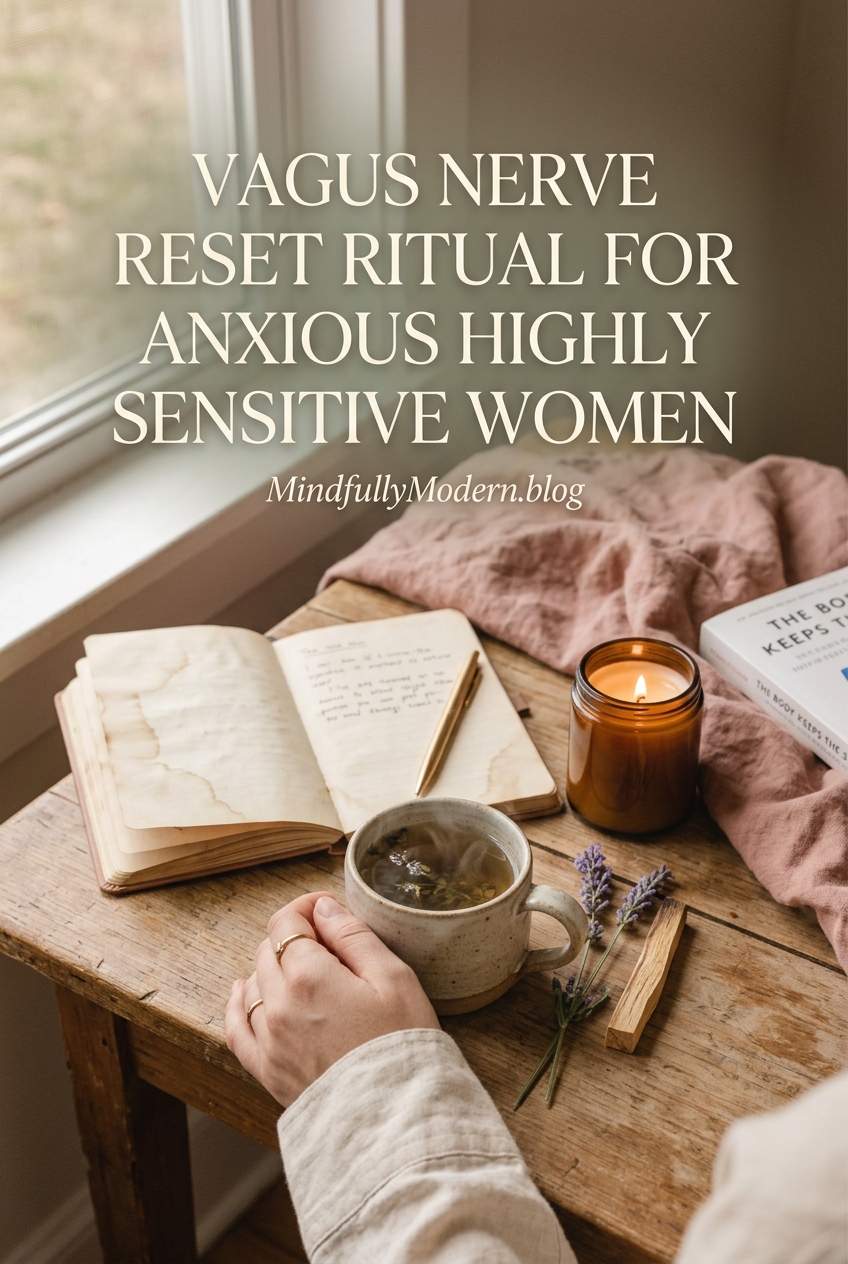
You know that feeling when your body hums with static—when every sound feels sharper, every sensation more invasive, and your chest tightens with an anxiety you can’t quite name? For highly sensitive women, this isn’t dramatic. It’s Tuesday. And what you’re experiencing isn’t weakness or overreaction—it’s a nervous system that processes the world more deeply, more intensely. The good news? A vagus nerve reset for HSP women can gently guide you back to yourself when everything feels like too much.
Your vagus nerve is the longest cranial nerve in your body, running from your brainstem down through your chest and abdomen. Think of it as the communication highway between your brain and body, the primary pathway of your parasympathetic nervous system—the part responsible for rest, digestion, and that elusive sense of calm. When you’re overstimulated or anxious, this nerve gets a little… stuck. A vagus nerve reset helps restore that natural flow.
Why Highly Sensitive People Need Vagus Nerve Regulation
As an HSP, your nervous system isn’t just sensitive—it’s finely calibrated. You pick up on subtleties others miss: the fluorescent light flicker, the shift in someone’s tone, the emotional undercurrent in a crowded room. This deep processing is a gift, but it also means your system reaches capacity faster. When your vagus nerve isn’t functioning optimally, you might experience persistent anxiety, digestive issues, difficulty sleeping, brain fog, or that bone-deep exhaustion that rest doesn’t quite fix.
The vagus nerve acts as your internal brake pedal, signaling safety to your body when the world feels overwhelming. For sensitive women, learning to activate this nerve intentionally becomes essential self-care—not luxury, but actual nervous system maintenance. Our Nervous System Regulation guide explores this concept more deeply, but today we’re focusing on gentle, embodied practices you can weave into your daily rhythm.
What Does a Vagus Nerve Reset Actually Feel Like?
Before we move into the how, let’s talk about the what. A successful vagus nerve reset doesn’t feel like a lightning bolt of relief. It’s subtler than that. You might notice your shoulders drop half an inch. Your breath deepens without effort. The tightness behind your eyes softens. Colors might look a little richer, sounds less abrasive. Your thoughts slow from frantic scrolling to a gentler pace.
Think of it less like flipping a switch and more like gradually turning down the volume on an overly loud song. Your body shifts from scan-for-danger mode into you’re-safe-here mode. For HSPs, this shift can feel profoundly grounding—like coming home to yourself after being scattered across a dozen different stimuli.
The 5-Minute Vagus Nerve Reset Ritual
This ritual combines breathwork, gentle movement, and sensory cues to activate vagal tone—essentially, to remind your nervous system that you’re safe. You can do this in the morning when anxiety wakes you before your alarm, during a lunch break when overstimulation peaks, or before bed when your mind won’t quiet.
- Cold water on your face: Fill your palms with cool water and press gently against your closed eyes and cheeks for 30 seconds. The cold activates the vagus nerve’s dive reflex, immediately signaling calm to your system.
- Humming or singing: Choose any simple melody or just hum a low, steady note for a full minute. The vibration in your throat and chest stimulates the vagus nerve directly. It might feel silly at first—do it anyway.
- Gentle neck releases: Slowly tilt your head to the right, bringing your ear toward your shoulder. Hold for three deep breaths. Repeat on the left. The vagus nerve runs along your neck, and this gentle stretch helps release tension in the pathway.
- Belly breathing with a longer exhale: Place one hand on your chest, one on your belly. Breathe in for a count of four, out for a count of six. Repeat five times. The extended exhale activates your parasympathetic response.
- Gentle self-massage: Using light pressure, massage the area behind your ears in small circles for 30 seconds on each side. This stimulates vagal nerve pathways and feels immediately soothing.
How to Know If Your Vagus Nerve Needs Support
Your body whispers before it screams. If you’re experiencing chronic low-level anxiety that never quite lifts, digestive troubles that don’t connect to specific foods, persistent fatigue despite adequate sleep, or difficulty transitioning out of stress mode even when the stressor is gone—your vagus nerve might be asking for attention.
Other signs include a racing heart that takes forever to calm down, shallow chest breathing as your default, feeling emotionally numb or disconnected, or getting stuck in worry loops that feel impossible to interrupt. None of this means something is wrong with you. It means your sensitive system has been working overtime and needs some intentional recalibration.
Daily Micro-Practices for Vagal Tone
Beyond the five-minute reset, small sensory habits throughout your day help maintain healthy vagal function. These aren’t about adding more to your plate—they’re about weaving nervous system care into moments you’re already experiencing.
a quieter inbox
Like this slower kind of writing?
Subscribe for soft letters — slow living, hygge, nervous-system care, & the four free gifts.
Gargle water for 30 seconds after brushing your teeth in the morning. The muscles activated during gargling stimulate the vagus nerve. Laugh—even forced laughter activates vagal pathways, so watch that silly video, call your friend who makes you giggle, give yourself permission for levity. Spend two minutes in gentle forward folds, allowing your head to hang below your heart. This positional shift calms your nervous system naturally.
Practice box breathing at red lights: inhale for four, hold for four, exhale for four, hold for four. Use a jade roller or gua sha tool on your neck and jawline before bed—the gentle pressure soothes vagal pathways and releases tension you didn’t know you were holding. Listen to music with strong bass frequencies; low tones resonate in your chest and activate the vagus nerve through vibration.
When to Practice Your Vagus Nerve Reset
The beauty of vagal nerve work is that it’s both preventative and responsive. Practice these rituals when you’re already relatively calm to strengthen your baseline vagal tone—think of it as training your nervous system to access ease more readily. This makes the reset even more effective when anxiety or overstimulation strike.
Use the five-minute ritual before potentially overwhelming situations: family gatherings, work presentations, difficult conversations. Practice it after overwhelming experiences too—the commute home, the overstimulating grocery store, the draining social event. And absolutely reach for these tools during acute moments of anxiety or panic. Your vagus nerve reset becomes an anchor, a reliable pathway back to safety.
Creating Your Own Vagus Nerve Reset Ritual
While the practices above offer a starting template, your nervous system is as unique as you are. Pay attention to which techniques create that subtle shift in your body—the softening, the deepening, the return to yourself. Maybe cold water feels shocking rather than soothing for you, but a warm compress on your chest works beautifully. Perhaps humming feels awkward, but singing in your car becomes sacred.
Build your ritual around what actually works for your sensitive system. The goal isn’t perfection or doing it “right”—it’s cultivating a reliable set of tools that help you move from dysregulation back to center. Over time, these practices become second nature, a gentle language between you and your nervous system.
You deserve to feel held by your own body, to access calm even when the world feels chaotic. Your sensitivity isn’t something to fix—it’s part of your wiring, your depth, your particular way of moving through the world. A vagus nerve reset for HSP women simply gives you the tools to honor that sensitivity while protecting your peace. Start small. Be patient with yourself. Notice what shifts. Your nervous system is listening, always.
Get my free 7-day slow living email series
One short email each morning. Gentle rituals for softer days. No spam, unsubscribe anytime.
Leave a Reply