
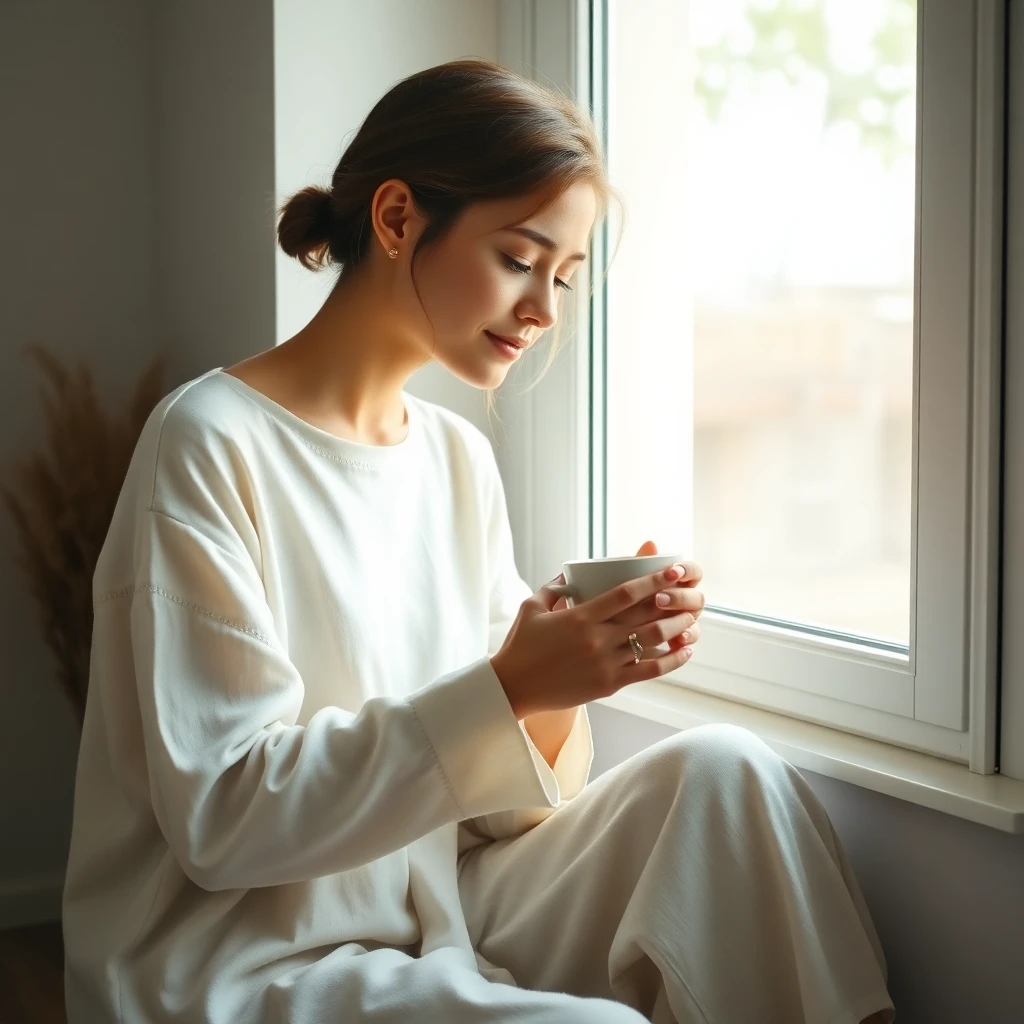
The alarm went off at 6:47 and my hand moved to silence it but my body stayed flat against the mattress like something weighted.
I remember thinking, in a very distant way, that I should move now.
My legs didn’t respond.
It was a Wednesday. Not a special Wednesday. Just the kind where I had back-to-back meetings and a grocery pickup at noon and a load of laundry that had been sitting damp in the washer since yesterday. The kind of day that required momentum, and I had none.
I lay there and watched the ceiling fan turn. One rotation. Two. Twenty.
The Negotiation
I tried bargaining with myself the way you do when your body and your brain have stopped being on the same team.
Just sit up. You don’t have to stand. Just sit.
Nothing.
Okay, then just open your eyes all the way. Blink twice. Prove you’re awake.
I blinked. My eyes felt sandy. I’d slept hard but woke up more tired than I’d been at midnight, which had become normal enough that I’d stopped mentioning it to anyone.
The light coming through the blinds was that soft early kind, almost apologetic. It should have felt peaceful. Instead it felt like proof. Proof that the world was moving and I wasn’t.
I thought about the meeting at nine. The one I’d prepped for. The slides I’d stayed up tweaking because the font on slide six looked off and if the font looked off then maybe I looked off and maybe they’d finally see what I’d been trying so hard to hide.
That I was running on fumes.
That I’d been running on fumes for so long I didn’t remember what fuel felt like.
What I Couldn’t See Then
The thing about burnout is that it doesn’t announce itself. It doesn’t send a calendar invite that says “total collapse, 6:47 a.m., be there or be functional.”
It’s smaller than that. Quieter.
It’s the way I’d started crying in the car on the way home from normal errands. The way I couldn’t finish a book anymore because my brain felt like static. The way I’d open the fridge and stand there for three full minutes, looking at the same yogurt and rotisserie chicken, unable to choose.
I’d been so good at pushing through.
I’d pushed through the headaches and the tightness in my chest and the feeling that my body was a thing I had to drag around instead of live inside. I’d pushed through the Sunday scaries that started on Friday. The 3 a.m. Wake-ups. The mornings I put on concealer in three layers because my under-eyes had their own zip code.
And I’d told myself it was fine. That this was just what being an adult looked like. That everyone was tired. That I just needed to try harder, sleep better, drink more water, wake up earlier, go to bed earlier, be better.
I’d been so good at pushing through that I didn’t notice I’d pushed myself off a cliff.
Lying there that Wednesday, I realized I didn’t have another push left in me.
The Slow Surrender
I texted my boss at 7:13. Just two lines. “Not feeling well. Taking a sick day.”
I didn’t elaborate. Didn’t apologize. Didn’t offer to check email later or reschedule the meeting myself or make it easier for anyone.
I just sent it and put my phone face-down on the nightstand.
Then I pulled the blanket up over my shoulders and let myself sink.
It felt like falling, but slower. Like finally exhaling after holding your breath for a year.
I didn’t get up until almost eleven. When I did, I moved carefully, like my bones were made of something brittle. I made toast. I ate it standing at the counter, looking out at the backyard where the grass needed mowing and the fence needed painting and everything needed something.
I didn’t do any of it.
I lit my 85-hour wooden-Wick Vanilla Candle and sat on the couch and stared at nothing for a very long time.
Later, when the tightness in my chest started creeping back, I used the Lavender roll-on I’d bought months ago and never opened. I rubbed it on my wrists, my temples, the back of my neck. It didn’t fix anything. But it smelled like care, and that felt like enough.
What Rest Actually Felt Like
I thought rest would feel good.
It didn’t. Not at first.
It felt like guilt with a side of low-grade panic. Every time I settled into the quiet, my brain served up a list: the emails piling up, the laundry still damp, the text I hadn’t answered, the person I was letting down by not being available.
But I stayed.
I stayed on the couch. I stayed in my body. I stayed with the discomfort of not doing, which turned out to be harder than any amount of doing had ever been.
By late afternoon, something shifted. The guilt didn’t disappear, but it got quieter. I noticed the way the light changed as it moved across the living room floor. I noticed that my shoulders had dropped an inch. That I’d taken a full breath without thinking about it.
That maybe — just maybe — the world hadn’t ended because I’d opted out for one day.
I thought about something I’d written before about resting when it feels impossible, about how the resistance to rest is often louder than rest itself. I hadn’t believed it then, not really. But sitting there, watching the candle flicker, I started to.
The Long-Overdue Part
One day didn’t fix me.
I wish I could say it did. That I woke up Thursday reborn, energized, healed.
I didn’t.
But I did wake up. And I moved a little slower. I said no to one thing I would’ve said yes to. I let the laundry sit another day.
And the sky didn’t fall.
That Wednesday became a kind of turning point, though I didn’t see it right away. It wasn’t dramatic. It was just the first time I chose my body over my productivity. The first time I let myself be unavailable without a doctor’s note or a good enough excuse.
It made me realize how much of my life I’d been living like I needed permission to be human.
I started asking myself the hard questions after that. The ones I’d been too busy to ask. Why was I so tired? What was I running from? What would happen if I stopped?
Some of those answers led me into harder seasons — the kind Where burnout and heartbreak overlapped and I had to rebuild more than just my schedule.
But it started here. In bed. On a Wednesday. With my body finally saying what I’d been too afraid to: I can’t.
More Stories From the Series
If this one stayed with you, here are a few more soft, honest essays from the same chapter of my life:
- The Soft Rebellion of Going to Bed at 9 PM
- The Night I Realized I Was Burned Out (And Didn’t Know It)
- How Lighting One Candle Saved My Worst Week
- A Letter to the Woman Who Said Yes to Everything
For anyone who finds comfort in the science behind these soft, lived experiences, The World Health Organization’s recognition of burnout is a gentle place to begin.
Where I Am Now
I still have hard mornings. Days where the alarm feels like an accusation. But I don’t fight my body the way I used to. I’ve learned that exhaustion isn’t a moral failure, and rest isn’t something I have to earn. Some days I still forget. But that Wednesday lives in me now, quiet and true — a reminder that sometimes the bravest thing I can do is stay exactly where I am.
Leave a Reply