
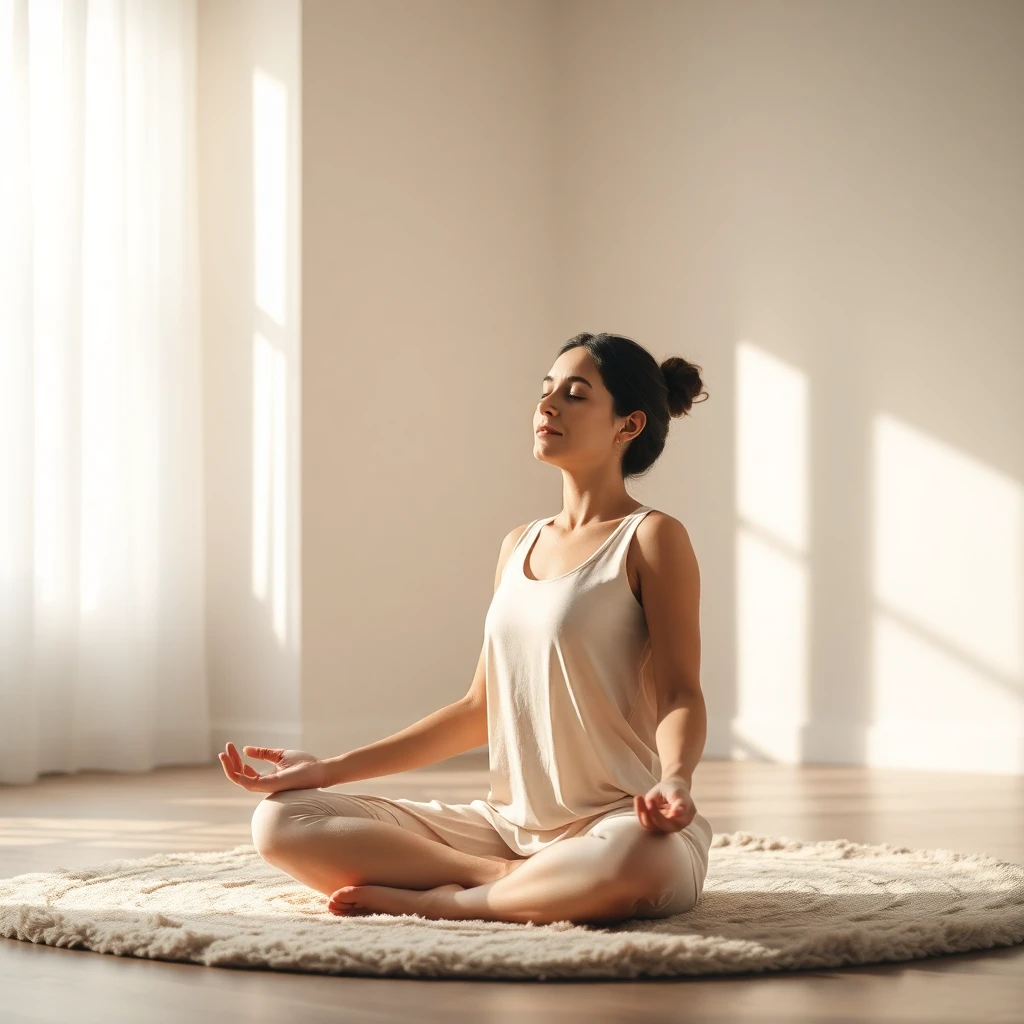
There’s a version of mindfulness that lives in most wellness images—legs folded into lotus position, spine impossibly straight, hands resting in mudras on bare knees. And if you’re anything like me, that image makes your hips ache just looking at it.
Here’s what I wish someone had told me years ago: You don’t need to contort your body to calm your mind. You don’t need to prove your dedication through discomfort. Soft mindfulness—practiced in positions that actually support your body—is not only possible, it’s often more sustainable For Sensitive Women who want to maintain a practice beyond the first uncomfortable week.
If traditional meditation postures have kept you from building a mindfulness practice, this is your permission to do it differently.
Why Cross-Legged Doesn’t Work for Everyone
Let’s be honest about something the meditation world doesn’t always acknowledge: sitting cross-legged on the floor can be genuinely uncomfortable, even painful, for many bodies.
Tight hips, knee issues, lower back sensitivity, past injuries, joint conditions, or simply preferring not to sit on hard surfaces—none of these make you less capable of mindfulness. The posture became associated with meditation through centuries of cultural tradition, but the essence of mindfulness has nothing to do with how your legs are arranged.
It’s about Presence. Noticing. Returning to breath and body with gentleness.
When the position itself becomes a barrier—when you spend the entire practice thinking about your numb foot or aching hip—you’re not actually present. You’re just uncomfortable. And no amount of willpower will transform that discomfort into depth. It will only teach you to associate mindfulness with pain, which is exactly how practices get abandoned.
What Soft Mindfulness Actually Means
Soft mindfulness is less about achieving a specific state and more about creating conditions where your nervous system feels safe enough to settle. It honors your actual body, your actual energy levels, your actual need for physical comfort.
This approach fits naturally within a broader Slow Living guide to everyday wellness—it’s less about performance, more about sustainable practices that work with your sensitivity rather than against it.
Soft mindfulness might look like:
- Lying down with a pillow under your knees and another supporting your head
- Sitting in your favorite chair with your back fully supported and feet on the floor
- Leaning against a wall with cushions supporting your back and hips
- Curling up on the couch under a soft blanket, body fully at ease
- Standing mindfully while washing dishes, feeling warm water on your hands
- Folding laundry with full attention to texture and movement
- Walking slowly in your garden or around your room, noticing each step
The position matters far less than the quality of attention you bring. Comfort isn’t a compromise—it’s what allows presence to deepen.
How to Practice Mindfulness in Comfort
Start by choosing a position that your body can maintain without strain for at least five to ten minutes. This is Essential. If you’re constantly adjusting or fighting discomfort, your nervous system stays in a low-grade alert state, which completely undermines the practice.
Sitting in a Chair
Try sitting in a supportive chair with your back fully resting against the backrest. Place both feet flat on the floor—this grounds your body and helps your nervous system register safety. Let your hands rest gently on your thighs or in your lap. No special hand position required.
Take a moment to feel the chair holding you. Notice the solid ground beneath your feet. Let your shoulders drop slightly. This is enough. You’re already doing it.
Lying Down
If lying down feels right, choose that without hesitation. Yes, you might fall asleep sometimes, and that’s genuinely okay—your body clearly needed rest, and rest is not failure.
Use a pillow under your knees to take pressure off your lower back. Place another under your head for support. Cover yourself with something soft if the room is cool. You might lie on your bed, on a yoga mat with blankets, or on the couch.
The goal isn’t to stay rigidly alert—it’s to be present with whatever arises, including the need for comfort and the pull toward rest.
Supported Reclining
Create a nest of cushions that allows you to recline at an angle—not quite sitting, not quite lying down. Prop pillows behind your back, under your knees, anywhere your body wants support. This position often works beautifully For Women Who find sitting upright tiring but don’t want to fully lie down.
Micro-Mindfulness Rituals That Feel Gentle
Formal sitting practice isn’t the only way to cultivate mindful presence. Some of the most grounding moments happen when we bring full attention to small, sensory experiences throughout the day.
These micro-rituals often work better For Highly Sensitive Women because they’re brief, they happen in contexts that already feel safe, and they don’t require special equipment or uncomfortable positions:
- Three deep breaths while your morning coffee steeps, noticing the aroma rising
- Feeling the warm water on your hands while washing your face, the temperature, the sensation
- Pausing to notice the texture of your softest sweater against your skin when you first put it on
- Listening to rain against the window for sixty seconds without doing anything else
- Placing both feet firmly on the floor during moments of stress and noticing the ground beneath you
- Running your fingers slowly over a smooth stone or soft fabric, feeling every detail
- Savoring the first sip of tea, noticing warmth, flavor, the cup in your hands
- Feeling your breath while waiting—for water to boil, a page to load, anything
Each of these is mindfulness. Each one brings you back to your body, to this moment, without requiring you to fold yourself into a shape that hurts. Over time, these small moments accumulate into a genuine practice that’s woven into your daily life rather than separated from it.
Creating Your Own Soft Mindfulness Space
If you want to establish a more regular practice, consider creating a dedicated comfort zone rather than a traditional meditation corner.
This might be a reading chair with good back support, a window seat with cushions piled just right, or even a spot on your bed with pillows arranged to cradle your body. The key is that it should be a place you actually want to return to—somewhere that feels like a gentle invitation rather than a test.
Add elements that support your nervous system:
- A soft throw blanket in a texture that soothes you
- A diffuser with lavender, chamomile, or whatever scent helps you settle
- Warm, soft lighting instead of harsh overhead bulbs
- A cushion or bolster that supports exactly where your body needs it
- Perhaps a simple object to focus on—a candle, a plant, a smooth stone
The space should invite you in rather than feel like somewhere you have to prove yourself. Keep the setup simple enough that you’ll actually use it. One comfortable seat, maybe a cushion or two, perhaps a candle. If the barrier to entry is too high—if you have to move furniture or dig out special props every time—you won’t return to it regularly.
Your mindfulness space can be as simple as claiming one corner of your couch with a specific blanket. What matters is that it feels like Yours.
Why Comfort Isn’t Cheating at Mindfulness
There’s sometimes a subtle message in wellness spaces that discomfort equals discipline, that ease means you’re not trying hard enough. But this completely misunderstands how sensitive nervous systems work.
When your body feels safe and supported, your mind can actually settle. When you’re fighting physical discomfort, a part of your awareness is always monitoring that discomfort—scanning for danger, tracking the pain, wondering if you should adjust. Which means you’re Less present, not more.
Choosing comfort isn’t taking the easy way out. It’s choosing the way that actually works for your body and your life. It’s recognizing that sustainability matters more than performing a particular aesthetic of wellness.
The point of mindfulness isn’t to prove you can endure discomfort. It’s to develop a kinder, more aware relationship with your present-moment experience. And that relationship begins with how you treat your body during the practice itself.
Starting Your Practice Without the Pressure
If you’re new to mindfulness or returning after a break, start with just three minutes. Truly. Not ten, not twenty—three.
Set a gentle timer (choose a soft sound, not a jarring alarm), find your most comfortable position, and simply notice your breath moving in and out. You don’t have to clear your mind. You don’t have to achieve anything. You don’t have to feel peaceful or enlightened or transformed.
Just notice—the rise and fall of your chest, sounds in the room, the feeling of fabric against your skin, the temperature of the air. When your mind wanders (it will, constantly, and that’s completely normal), gently guide your attention back. No judgment, no frustration. Just a soft return, again and again.
Do this for three minutes, once a day, in whatever position feels sustainable. That’s a complete practice. Everything else is optional.
As the days pass, you might naturally extend to five minutes, then seven. Or you might stay with three minutes for months. Both are perfect. The practice isn’t measured by duration—it’s measured by consistency and kindness.
Trust What Your Body Already Knows
You already know what your body needs. You know which positions feel sustainable and which ones leave you counting the seconds until you can move. You know when you’re present and when you’re just performing presence.
The invitation here is simply to trust that knowledge—to build a mindfulness practice that fits you rather than trying to fit yourself into someone else’s idea of what presence should look like.
Your comfort matters. Your sensitivity is not a flaw to overcome. And peace doesn’t require painful postures.
It requires only this: your willingness to show up as you are, in a body that’s allowed to feel good, and meet this moment with gentle attention. That’s the whole practice. Everything else is just decoration.
Start there. Start comfortable. Start now.
Leave a Reply