
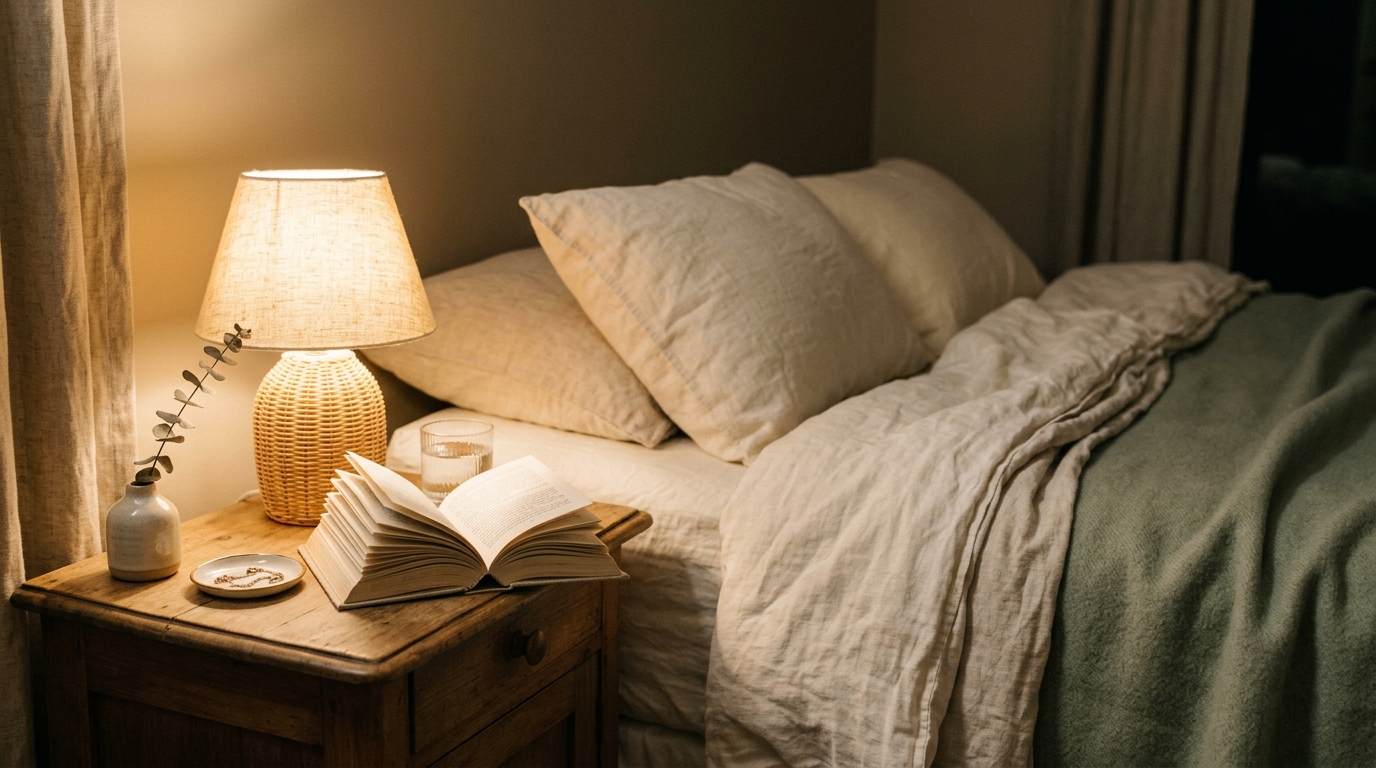
When you live alone, the house feels different after dark. The space that felt so free and airy all day suddenly hums with quiet. It’s not loneliness, exactly. It’s more like presence without distraction. You become aware of every creak, every hum of the fridge, the way your own breath sounds louder when no one else is there to fill the silence.
Building a bedtime routine when you live solo isn’t about following steps to fall asleep faster. It’s about creating a ritual that makes you feel held, even when you’re the only one holding yourself. It’s about turning the solitary hours before sleep into something tender instead of something to rush through.
The gift (and challenge) of solo nights
There’s a strange vulnerability to being alone at night. No one watches you brush your teeth or reminds you to turn off the kitchen light. You make every small decision yourself: when to lock the door, whether to leave the hall light on, how many blankets feel like enough. Some nights, this freedom feels luxurious. Other nights, it feels too big.
The gift is that you get to design your evenings exactly how your nervous system needs them. You’re not negotiating bedtimes or adjusting to someone else’s rhythms. You can move slowly. You can be quiet or play music. You can wear your softest clothes and take up the whole bed and let the night unfold at your own pace.
The challenge is learning to become your own companion during the hours when most people turn toward someone else. It’s recognizing that the rituals you build for yourself matter just as much as the ones you’d build with a partner or roommate. Maybe even more, because they’re entirely yours.
Lighting and sound: your two best tools
a quieter inbox
Like this slower kind of writing?
Subscribe for soft letters — slow living, hygge, nervous-system care, & the four free gifts.
Harsh overhead lights after sunset can make a space feel clinical, too awake. When you live alone, you have full control over how your evening light feels. Warm lamps with amber bulbs. Salt lamps that glow like embers. String lights draped low. Candlelight if you feel safe leaving candles burning. The goal is dimness that feels like a soft exhale, not a spotlight.
Sound works the same way. Silence can be soothing, but sometimes it amplifies the feeling of aloneness. A white noise machine, rain sounds through a small speaker, a playlist of instrumental music or lo-fi beats can fill the space without demanding your attention. The hum becomes a kind of presence. Not intrusive. Just there.
Some women keep a bedside lamp on a timer so it clicks off thirty minutes after they’ve settled in. Others prefer total darkness but leave a nightlight in the hallway. There’s no right answer. The question is: what makes your body relax instead of brace?
A 30-minute wind-down sequence
Start by closing the kitchen. Wash your mug or water glass, wipe the counter, put away anything that would greet you harshly in the morning. This isn’t about being tidy for tidiness’s sake. It’s about signaling to yourself that the doing part of the day is over. You’re moving into receiving mode now.
Next, tend to your body with something gentle. A warm shower with lavender soap. Brushing your hair slowly, like you’re soothing a child. Moisturizing your hands and feet with something that smells soft. These aren’t beauty tasks. They’re acts of care that remind you that you’re worth touching tenderly, even when no one else is there to do it.
Then settle into your bedroom and do one quiet thing that isn’t a screen. Read three pages of poetry or fiction. Journal a few sentences about what felt good today. Stretch on the floor with your legs up the wall. Sip chamomile tea from your favorite mug. The activity itself matters less than the softness of it.
The last five minutes are for arrangement. Fluff your pillows. Pull the blankets up just how you like them. Set your phone across the room if that feels right, or keep it near but face-down. Place a glass of water within reach. You’re not just getting into bed. You’re creating a nest.
Comfort objects for solo sleep
This might sound childish at first, but comfort objects aren’t about regression. They’re about giving your body something to anchor to. A weighted blanket that feels like gentle pressure. A hot water bottle tucked near your stomach or feet. A silk pillowcase that’s cool against your cheek. A stuffed animal or body pillow you can curl around without feeling self-conscious because no one is there to judge.
Some women keep a specific sweater or robe that only comes out at bedtime. The fabric becomes associated with rest, with safety, with the transition into sleep. Others use a particular pillow spray or keep a small sachet of dried lavender tucked under their pillow. The scent becomes a signal: this is where softness lives.
You might also consider sound or touch tools. A small vibrating massager for your neck or temples. A silk eye mask that blocks light without pressure. Soft socks or a cozy throw that stays at the foot of the bed for when you wake up cold at 3 a.m. These aren’t indulgences. They’re the things that make solo sleep feel less like endurance and more like homecoming.
Closing the day with self-companionship
Before sleep, some women find it grounding to speak a few kind words aloud to themselves. Not affirmations in the Instagram sense. Just simple, honest things. “You did okay today.” Or “It’s safe to rest now.” Your own voice in the quiet can feel surprisingly steadying, like you’re being witnessed even though you’re alone.
Others prefer silence but practice a brief body scan, mentally thanking each part of themselves for getting through the day. Feet that carried you. Hands that worked. Heart that kept beating. This isn’t about gratitude as a productivity hack. It’s about relationship. About recognizing that you’re not just a brain in a bed, you’re a whole being that deserves acknowledgment.
Closing the day well when you live alone means learning to become the gentle presence you might have once looked for in someone else. It’s not the same as partnership, and it doesn’t have to be. It’s its own kind of intimacy. Slower, quieter, but no less real.
Final Thoughts
The nights when you live alone will sometimes feel long. Other times, they’ll feel like the most peaceful part of your day. Both are true. Both are allowed. Building a bedtime routine isn’t about eliminating the awareness of solitude. It’s about softening the edges around it so it feels less like loneliness and more like chosen quiet.
You don’t have to get this perfect. Some nights you’ll skip the whole ritual and fall asleep in your clothes with the light on. That’s fine. The routine is there for the nights when you need it, when your nervous system is looking for something to hold onto. Let it be simple. Let it be soft. Let it be yours.
Related Reads on Mindfully Modern
What This Is
This guide helps you design a peaceful evening ritual tailored to solo living. When you live alone, bedtime can feel untethered or lonely — but it’s also your chance to create something deeply personal. We’ll explore gentle practices that signal safety to your nervous system and transform those quiet hours into sacred self-care time.
You’ll find practical ways to wind down without relying on another person’s presence, plus mindset shifts that reframe solitude as comfort rather than isolation.
Who This Is For
This is for you if you live alone and struggle with the transition from day to night, or if evenings feel too quiet, too long, or vaguely unsettling.
- You’re a sensitive woman who feels the weight of silence after sunset
- You scroll your phone in bed because the alternative feels too still
- You’re trying to build healthier sleep habits but don’t know where to start
- You crave ritual and rhythm but nothing you’ve tried has stuck
- You want your solo living space to feel like a sanctuary, especially at night
How to Use This
Start small and build gradually. You don’t need to overhaul your entire evening — just pick one or two elements that feel genuinely appealing and try them for a week.
- Choose a consistent wind-down time, even if it’s just thirty minutes before bed
- Select one sensory anchor — a specific tea, a particular candle scent, soft lighting
- Create a simple closing ritual for your day (journal three lines, tidy one surface, set out tomorrow’s clothes)
- Establish phone boundaries — decide when and where devices go to sleep
- Add one comfort element that soothes your nervous system (weighted blanket, white noise, gentle stretching)
- Notice what makes you feel held and safe, then weave more of that into your routine
More from MindfullyModern
If this softness met you where you are, you may also love the MindfullyModern Slow Living Hub, Evening Wind-Down Routine for Burned-Out Women (15 Minutes) on Mindfully Modern · the MindfullyModern Burnout Relief Hub. This Mindfully Modern guide is part of a soft, growing library at MindfullyModern.
Frequently Asked Questions
How do I make bedtime feel less lonely when I live alone?
Focus on creating presence rather than filling emptiness. Light a candle and talk to yourself kindly as you move through your routine. Play gentle music or ambient sounds that feel like companionship without demanding attention. The goal isn’t to distract from solitude but to make it feel warm.
What if I don’t have time for an elaborate bedtime routine?
Your routine can be ten minutes long and still transform your sleep. Pick just three tiny actions — maybe dimming lights, brewing tea, and writing one grateful sentence. Consistency matters infinitely more than complexity. A brief ritual done every night beats an hour-long routine you abandon after three days.
Should I completely avoid screens before bed?
Ideally, yes — but perfectionism helps no one. If you need your phone, set boundaries that feel doable. Try keeping it across the room, using night mode, or setting a timer. Reading something calming on a dimmed screen beats doomscrolling in the dark. Progress over perfection, always.
How can I signal to my body that it’s time to wind down?
Your nervous system responds to consistent cues. Lower the lights an hour before bed. Change into sleep clothes even if you’re not tired yet. Sip something warm without caffeine. Move slowly and deliberately. These small signals tell your body that the day is ending and safety is here.
Free printable checklist
The Soft Evening Reset Checklist
A 7-step soft evening ritual for nights when life feels overwhelming. Body-based, sensory, and gentle.
related reads
More from the journal
Get my free 7-day slow living email series
One short email each morning. Gentle rituals for softer days. No spam, unsubscribe anytime.