
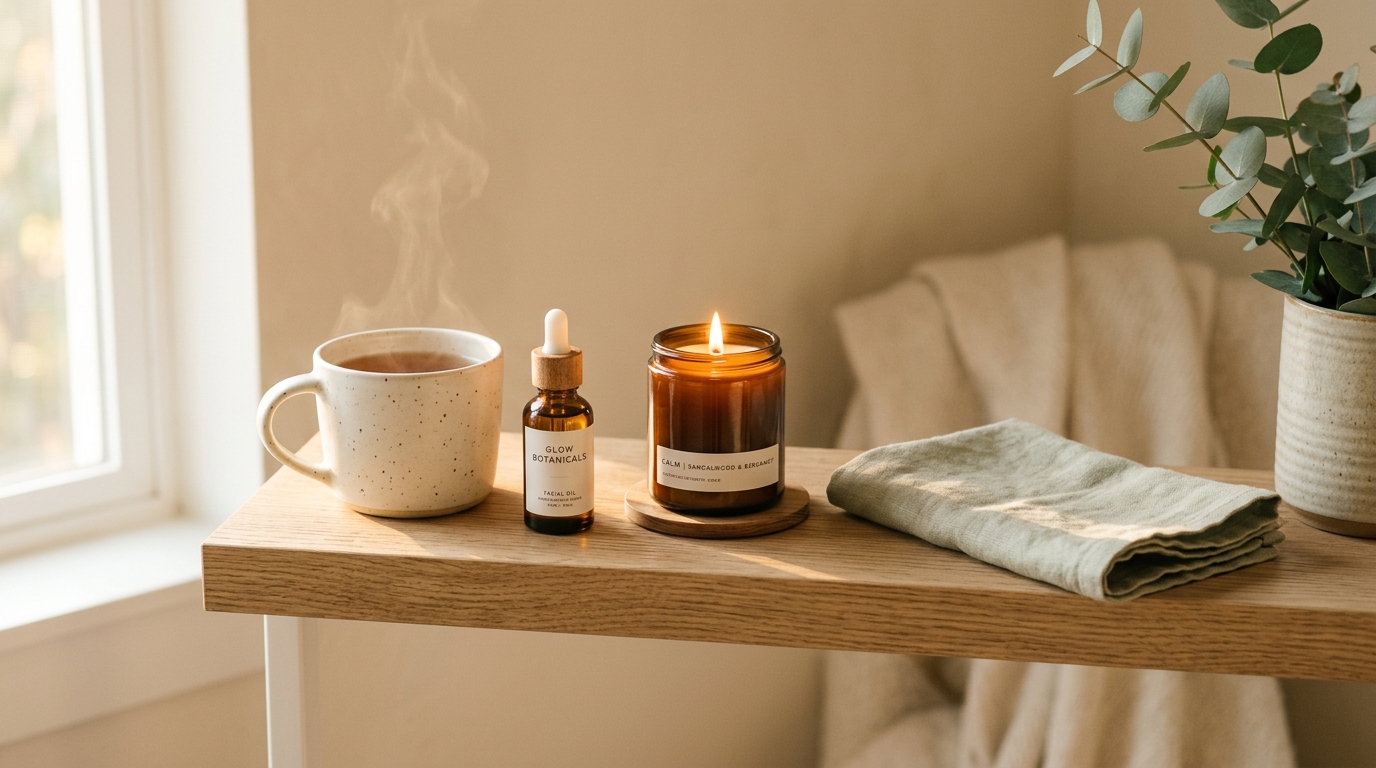
You’ve tried the morning routines. The seven-step skincare. The elaborate evening wind-downs that require three candles, a journal prompt, and the exact right playlist. And maybe they worked for a week, or even a month. But then life happened. A busy season arrived. You missed a day, then three, and the whole thing quietly fell apart.
This isn’t a failure of willpower. It’s a design problem. Most self-care routines are built like luxury vacations when what we actually need is a home we can return to every single day. Something simple enough to hold, flexible enough to bend, and nourishing enough to matter.
Why most self-care routines collapse
We build self-care routines the way we’re taught to build everything else: more is better, complexity signals commitment, and if we’re not doing it perfectly, we might as well not do it at all. So we stack practice upon practice until our routine becomes another item on an already overwhelming to-do list.
The collapse usually happens quietly. We miss one piece and suddenly the whole sequence feels broken. Or the routine was designed for a version of our life that no longer exists. Maybe it required thirty uninterrupted morning minutes we simply don’t have anymore. Maybe it was borrowed from someone else’s rhythm and never quite fit our own.
Self-care stops working when it becomes performance. When we’re doing it to prove something rather than to genuinely tend to ourselves. When it asks more than it gives back.
A routine that sticks isn’t the most impressive one. It’s the one that meets you where you are, even on the hard days. Especially on the hard days.
The capsule concept (3-5 anchors)
a quieter inbox
Like this slower kind of writing?
Subscribe for soft letters — slow living, hygge, nervous-system care, & the four free gifts.
Think of a capsule wardrobe. A small collection of pieces that all work together, that you actually wear, that make getting dressed feel simple instead of stressful. A capsule self-care routine works the same way.
You choose three to five core practices. Not thirty. Not a different thing for every mood and circumstance. Just a handful of anchors that genuinely resource you. These are practices you can do in ten minutes or less, that don’t require special equipment or perfect conditions, that feel nourishing rather than obligatory.
Maybe it’s five minutes of gentle stretching in the morning. A daily cup of tea you actually sit down to drink. Three deep breaths before you start your work. A short walk around the block. Washing your face with intention before bed. Small, repeatable moments that signal to your nervous system: you matter, we’re taking care of you.
The beauty of keeping it small is that you can actually do it. And doing something simple consistently will always serve you better than doing something elaborate occasionally. Your body remembers the care you show up with, even in small doses.
Choosing your anchors by season of life
The practices that sustained you last year might not be the ones you need now. What works in a slow summer might not translate to a demanding fall. What nourishes you when you’re alone is different from what you need when caring for others.
Let your current reality guide you. If mornings are chaotic, don’t force a dawn meditation practice. If evenings are your only quiet pocket, that’s where you place your anchor. If you’re touched-out from caregiving, maybe your practice is ten minutes alone in your car before going inside. If you’re isolated, maybe it’s one text to a friend who makes you feel seen.
Consider your energy, your schedule, your actual life. Not the life you wish you had or the life you think you should have. The one you’re living right now, with its specific textures and constraints.
Your anchors might shift with the seasons, and that’s not inconstancy. That’s wisdom. Let your routine be responsive, not rigid.
Stacking habits gently
Habit stacking sounds efficient in theory but often becomes another way we overcomplicate things. The gentle version is different. You’re not forcing new practices into every crack of your day. You’re looking for natural joints, places where one thing already flows into another.
After you brush your teeth, three slow breaths. After you make your morning coffee, two minutes looking out the window. After you close your laptop for the day, one song that helps you transition. The existing habit becomes a doorway rather than a burden.
Notice what’s already stable in your routine and see if one small practice could nestle beside it. Not stacked on top. Not squeezed in. Just gently placed next to something you’re already doing.
If it feels forced, it probably is. Trust the resistance. Try a different pairing or a different practice entirely. This is about making care easier, not proving you can endure complicated systems.
Reviewing and softening it monthly
Once a month, take ten quiet minutes to check in with your routine. Not to judge it or grade yourself. Just to notice. What’s actually happening? Which anchors are you reaching for naturally? Which ones feel like stones in your pocket?
This isn’t about discipline or failure. Sometimes a practice stops working because you’ve integrated what it was teaching you. Sometimes your life has shifted and you need something different. Sometimes you just need to adjust the timing or the duration to make it sustainable again.
Give yourself full permission to edit. To remove something that’s become obligatory. To try something new. To simplify even further if that’s what your season requires.
The goal isn’t a perfect routine you maintain unchanged for years. It’s a living practice that bends with you, that serves your actual needs, that remains a source of nourishment rather than becoming another place you feel inadequate.
Final Thoughts
Your self-care routine doesn’t need to be impressive. It doesn’t need to look like anyone else’s. It just needs to be something you can actually do, something that genuinely tends to you, something that reminds your body it’s safe and cared for.
Start smaller than feels significant. Three anchors. Five minutes each. See what happens when you stop trying to do everything and instead do a few things with presence and consistency. That’s where the real transformation lives. In the smallest gestures, repeated with tenderness, until they become the ground beneath you.
More from MindfullyModern
If this softness met you where you are, you may also love the MindfullyModern Slow Living Hub, Soft Routines for Women Returning to Work After Burnout Leave on Mindfully Modern · the MindfullyModern Burnout Relief Hub. This Mindfully Modern guide is part of a soft, growing library at MindfullyModern.
Frequently Asked Questions
Why do my self-care routines always fail?
Most routines collapse because they’re too elaborate, too rigid, or built for someone you aren’t. A capsule routine has 3–5 anchors instead of 12+, which makes it sustainable through hard weeks.
How many habits should a capsule self-care routine have?
Three to five core anchors. Any more and life will eventually disrupt it. Three to five is forgiving enough to survive bad days.
How long until a capsule routine feels automatic?
Most people feel locked-in after 21–30 days of consistent practice. Skip a day occasionally; the routine survives.
Should I change my capsule routine with the seasons?
Yes — gently. Winter routines tend toward warmth and rest; summer toward movement and sunlight. Review your anchors monthly and let them shift.
Related Reads on Mindfully Modern
Free 4-week soft-life plan
The 30-Day Soft Life Starter Guide
Four gentle weeks of small habits that build a softer, more livable life. One habit per week. No drastic overhauls.
related reads
More from the journal
Get my free 7-day slow living email series
One short email each morning. Gentle rituals for softer days. No spam, unsubscribe anytime.